
The questions Dean answers every week.
The ones we get asked most. If yours is not here, ring and ask. The advice is free whether you book us or not.
- Why does my telly keep pixelating when it is windy?
- Why does my TV say no signal all of a sudden?
- Is there such a thing as a digital aerial?
- Do I need a new aerial for Freeview or Freeview HD?
- How much should it cost to have a TV aerial fitted?
- Why does one TV work but not the other on the same aerial?
- How do I get Freeview in a room with no aerial socket?
- Why did my aerial stop working after the storm?
- How quickly can you come out?
- Do you cover Churwell, Gildersome, Tingley and Birstall?
- Will you tune the TV in, or is that left to me?
- Can anyone recommend a trustworthy aerial engineer near me?
- How do I check a local aerial installer is legitimate?
- Who is responsible for the communal aerial: landlord, management company or me?
Why does my telly keep pixelating when it is windy?
Usually the aerial is moving, or a connection has worked loose. Wind makes an already-marginal signal drop below the level your TV needs, so the picture breaks into blocks or freezes. It is rarely the television. Nine times out of ten it is the aerial, the fixings or the cable where it enters the house.
Why does my TV say no signal all of a sudden?
Either the signal has stopped arriving or the TV has lost its channel list. Try a retune first: it costs nothing and sometimes that is all it is. If a retune finds no channels at all, the problem is upstream: the aerial, the cable, or a transmitter fault. Give us a ring and we will tell you which before anyone comes out.
Is there such a thing as a digital aerial?
No. There is no such thing, and if someone is trying to sell you one, be careful. Aerials receive a range of frequencies, and they do not know or care whether what they are receiving is analogue or digital. A good aerial pointed at the right transmitter is a good aerial. What can genuinely need changing is an old, corroded or wrongly-grouped aerial, but that is a different conversation from a "digital upgrade".
Do I need a new aerial for Freeview or Freeview HD?
Usually not. Most aerials that worked before will still work, provided they are in good condition and pointed at the right transmitter. If yours is old, damaged or was fitted for a transmitter that has since changed, replacing it may help, but it should be a decision based on measuring the signal, not on a guess.
How much should it cost to have a TV aerial fitted?
It depends on more than people expect: how high the aerial has to go, how you get to it, how much cable has to be run and made good, and what equipment the signal in your area actually needs. That is why the call-out and the advice are free: we would rather look first and give you a real number than quote blind over the phone and change it when we arrive.
Why does one TV work but not the other on the same aerial?
Almost always the way the signal has been split. Every time a signal is divided it gets weaker, so a set at the end of a long run, or behind a cheap splitter, drops out while the others look fine. It is usually fixable with proper distribution rather than a new aerial.
How do I get Freeview in a room with no aerial socket?
We run a new point from the existing system, or fit distribution so several rooms are fed properly rather than split badly. Cable can usually be run discreetly. This is one of the most common jobs we do.
Why did my aerial stop working after the storm?
Wind moves aerials. Even a few degrees off and the signal drops; a bad gust can shear a bracket or bring the whole thing down. If yours is visibly hanging or has moved, do not go up after it. Ring us and we will make it safe.
How quickly can you come out?
Call-out is within 24 hours, and it is free whether you end up booking us or not. We ring when we are about half an hour away so you are not sat in waiting all day. If the aerial is visibly hanging off after a windy night, say so when you ring: that one we treat as urgent, because it is a safety job before it is a television job.
Do you cover Churwell, Gildersome, Tingley and Birstall?
Yes, all four, and they are close enough to Morley that we are usually there the same day or the next one. Churwell and Gildersome are a few minutes up the road, Tingley and Birstall not much further. The call-out is free in all of them, the advice is free whether you book us or not, and we ring about half an hour before we arrive. Further out across Leeds and West Yorkshire we still come, it just may not be the same day. If you are not sure whether you are in the patch, ring and ask rather than guessing.
Will you tune the TV in, or is that left to me?
We tune it in. Before we leave, every television on the system is tested at the set and tuned in on the new connection, so the channels are in the right order and you are not left with the retune menu and a handset you have not used in five years. If there is a box, a soundbar or a set in another room on the same system, that gets checked and tuned in too. Not every installer does this, so it is worth asking whoever you ring.
Can anyone recommend a trustworthy aerial engineer near me?
It is the question people ask most, and it is a fair one, because this trade has a reputation problem. What we would say: look for someone local with an address you can find, ask whether the call-out and advice are free, and ask for the price before work starts. We have been in Morley since 1997, and most of our work still comes from people who were recommended to us.
How do I check a local aerial installer is legitimate?
Ask for an address you can actually find, not just a mobile number and a website. Ask whether the call-out and the advice are free, and whether you get a price before any work starts. Ask what trade body they belong to and for the number, so you can check it rather than take their word for it: we have been members of the Confederation of Aerial Industries since 1998, membership number C858. And ask what happens if it is not right afterwards. Anyone who is straight with you will not mind being asked any of that.
Who is responsible for the communal aerial: landlord, management company or me?
If you are a leaseholder or tenant in a block, the communal system is almost always the freeholder or management company’s responsibility, and its upkeep is usually covered by your service charge. Your own flat’s wiring from the outlet onwards is normally yours. If you are the managing agent and the system needs looking at, that is work we do. See our commercial page.
Still not sure?
Ring and ask. We will tell you what we think is wrong before anyone comes out, and the advice costs nothing.
Two of these come up often enough to have a page of their own: Freeview and Freesat, what they cost to keep and what they will not do without a bit of help.
Our own jobs, not stock photographs.
Every picture below is one of ours. The tidy end of this trade is the part you cannot see from the ground, so it is worth showing.
-
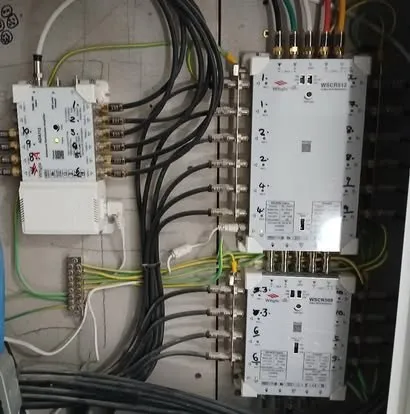 Head-end, labelled
 -
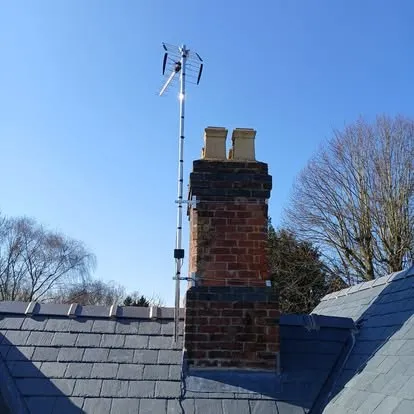 Chimney mount
 -
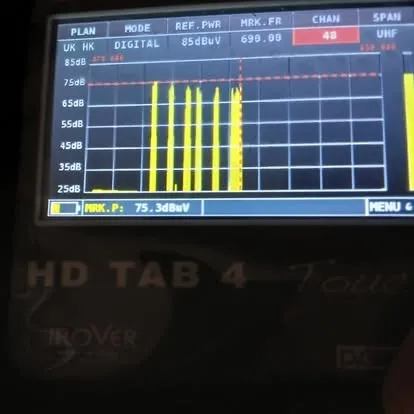 Measured, not guessed
 -
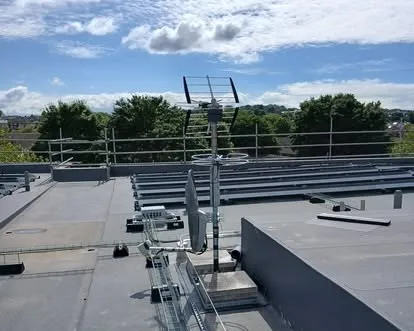 Communal array
 -
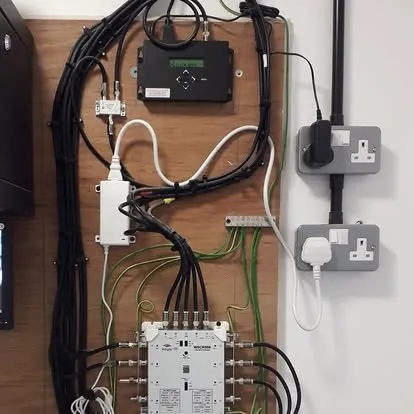 Distribution board
 -
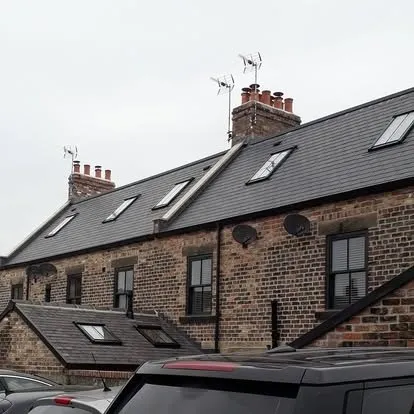 Stone terraces
 -
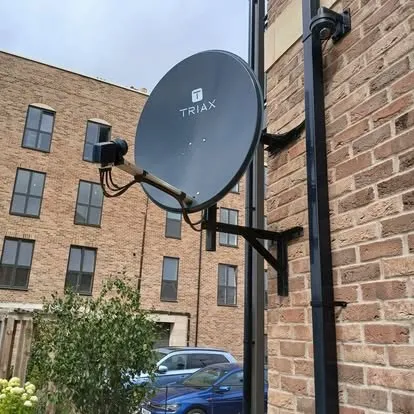 Block install
 -
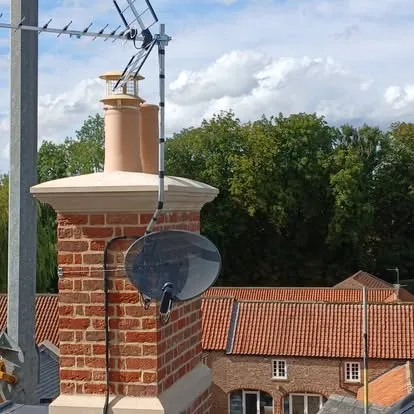 Dish and aerial
Question not on the list?
The call-out is free and so is the advice, including when the advice is that you do not need us. You get a price before anything starts.
- Established 1997
- Free call-out
- 12-month workmanship guarantee
- Right first time, or we come back